Detailed guide
The process at a glance
Estate administration usually follows the same broad path, even though every estate has its own complications.
Most estates move through these stages:
- deal with the urgent practical steps after the death
- work out who is acting and what documents are in place
- build a clear picture of the assets and debts
- check the tax position and whether probate is needed
- apply for probate or the relevant authority
- collect in the estate and pay what needs paying
- prepare the final figures and distribute the estate
- close the file properly
Some of these stages overlap. That is normal. What matters is understanding the order they sit in.
1. Deal with the urgent practical steps
This is the very beginning of the process.
At this stage, people are usually:
- registering the death
- sorting the immediate family and funeral arrangements
- locating the will and key documents
- securing the home, paperwork, and valuables
- starting to notify important organisations
If you are here, start with What to Do After a Death: First Steps for Executors.
2. Work out who is acting
Before the estate can move properly, you need clarity on who is dealing with it.
That usually means answering:
- is there a valid will?
- who are the named executors?
- is everyone acting together?
- is this an executor route, an administrator route, or a Scotland confirmation route?
This stage matters more than people think. A lot of delays later on come from unclear authority at the start.
3. Build the estate picture
Once the acting position is clear enough, the next job is to understand what the estate actually consists of.
That usually includes:
- bank accounts and savings
- property and land
- investments and pensions
- debts, loans, and credit cards
- regular bills and ongoing costs
- anything unusual such as business interests, trusts, or foreign assets
This is the point where the estate stops being a vague idea and becomes something you can work with properly.
4. Check the tax and probate position
Before the application stage, you usually need to know:
- whether probate is actually needed
- what the estate is worth
- whether there is any Inheritance Tax issue to deal with
- whether the estate follows a simple route or a fuller reporting route
This is also where many estates slow down, because property values, tax questions, and missing information often take time to pull together.
If you are at this point, Do I Need Probate? How to Tell and Which Inheritance Tax Form Do I Need for Probate? are the best next reads.
5. Apply for the legal authority
Once the groundwork is in place, the estate can move into the formal authority stage.
Depending on the estate, that may be:
- a Grant of Probate
- Letters of Administration
- confirmation in Scotland
This stage is important, but it is not the whole process. It only works well when the estate picture underneath it is already clear.
6. Collect in the estate and pay what needs paying
After the grant or other authority is issued, the administration becomes more active.
This usually includes:
- collecting money from banks and other institutions
- closing or transferring accounts
- selling or transferring property where needed
- paying debts, tax, funeral costs, and administration expenses
- keeping track of any income received during the administration period
This is often the longest part of the estate. It is also the stage where good records make the biggest difference.
7. Prepare the final figures and distribute the estate
Before final payments go out, the executor should be able to show:
- what came into the estate
- what has been paid out
- whether any money is still being held back
- how each beneficiary's figure has been calculated
Only then is the estate usually ready for final distribution.
If you are approaching this stage, read How to Pay Estate Beneficiaries Safely and Keeping Accurate Estate Accounts and Estate Records.
8. Close the estate properly
Closing the estate is more than stopping work on it.
A clean close usually means:
- the key tax and debt issues have been dealt with
- the estate accounts are in final form
- the final payments have been recorded
- the main documents and evidence have been kept together
- there are no loose ends being quietly ignored
This matters because questions about estates often come up after everyone thinks the work is finished.
Where estates usually slow down
Most delays come from a few familiar places:
- missing documents
- slow responses from institutions
- property valuations or sales
- inheritance tax questions
- unclear executor arrangements
- disputes between the people involved
That is why estate administration rarely feels like a straight line from start to finish.
What helps most
The estates that usually run best have the same strengths:
- one clear list of assets and debts
- good supporting documents
- a clear record of who is acting
- open issues written down instead of held in someone's head
- a sensible order of work instead of rushing ahead to distribution
You do not need to move fast at every stage. You need to move in the right order.
When to get specialist advice
Some estates need more than standard process discipline.
Consider specialist advice if the estate involves:
- possible insolvency
- foreign assets or foreign tax questions
- trusts or business interests
- uncertainty over the will or who should act
- serious family disagreement
In those estates, the overall process is still similar, but the detail matters much more.
How Estate Suite fits into the process
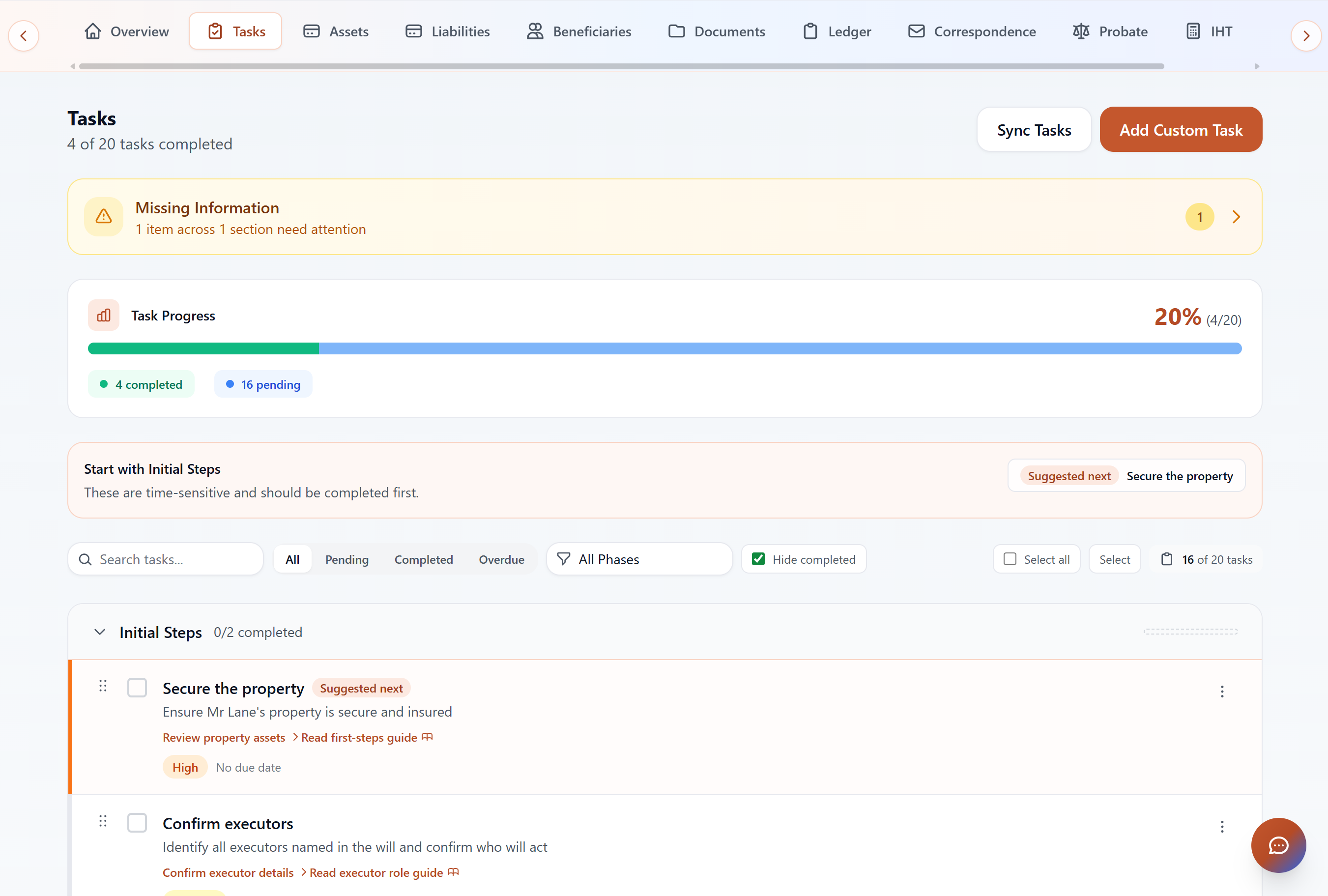
Estate Suite works best when it mirrors the real journey:
- capture the facts and missing questions early
- build the asset and debt list with evidence attached
- keep documents, correspondence, and tasks tied to the same issues
- move into tax and probate only when the groundwork is ready
- use the ledger and final account tools to support clean distribution
That is what helps the estate stay organised from the first step to the last.