Detailed guide
What estate accounts actually are
Estate accounts are the financial record of everything that has happened during the administration of the estate.
They explain:
- what the estate was worth at the start
- what money came in afterwards
- what debts, tax, and expenses were paid
- what was left to distribute
- what each beneficiary received
In other words, they tell the story of the estate in numbers.
Why they matter
Estate accounts are not just paperwork for the sake of it.
They matter because they help you:
- keep control of the administration
- answer beneficiary questions clearly
- spot missing payments or unexplained movements
- show how final figures were worked out
- protect yourself if the estate is questioned later
Many estate problems are not caused by one major mistake. They come from weak records, missing explanations, and figures that no longer tie together.
What good estate accounts usually include
The exact layout varies, but most estate accounts will cover:
- the assets and liabilities at the date of death
- money collected into the estate
- debts and expenses paid out
- tax paid or held back
- income received during the administration period
- any interim payments to beneficiaries
- the final balance available for distribution
Every important figure should be traceable to something real, such as a statement, valuation, invoice, receipt, or written note.
Start keeping records from day one
The easiest way to end up with weak estate accounts is to leave them until the end.
From the start, keep:
- date-of-death balances and valuations
- invoices and receipts
- bank records
- tax references and payment confirmations
- notes of unusual decisions
- calculations showing how beneficiary shares have been worked out
If you cannot explain where a figure came from, treat it as unfinished.
Keep estate money separate
This is one of the simplest habits and one of the most important.
Wherever possible:
- keep estate money separate from personal money
- make estate payments in a way that can be traced
- document reimbursements clearly
- avoid informal cash handling where it creates confusion later
If the money trail is blurred, the accounts become harder to trust.
Build the accounts as you go
The best estate accounts are rarely produced in one go at the very end.
They are usually built gradually:
- record the payment, receipt, or adjustment
- attach the supporting document
- match it to the relevant bank movement
- note anything that still needs checking
- update the running estate totals
This is much easier than trying to rebuild months of activity from memory once the estate is nearly finished.
Do not forget income during administration
Some estates continue to receive money after the death and before final distribution.
That might include:
- bank interest
- dividends
- rent
- sale proceeds arriving at different times
That money still needs to appear in the estate accounts. If it does not, the final picture will be incomplete.
This is also why How to Close an Estate and Finalise Estate Accounts should be read alongside this guide.
What beneficiaries usually want to see
Beneficiaries do not need a running update on every small step. But by the end of the estate they should usually be able to understand:
- what the estate started with
- what was paid out
- whether any money was held back and why
- how the final distribution figures were reached
If the accounts are clear, most questions become much easier to answer.
Signs your records need work
Your estate accounts probably need attention if:
- you have made payments you cannot quickly explain
- some figures come from memory rather than documents
- the ledger and the paperwork do not match
- beneficiary figures have changed with no note showing why
- you are hoping nobody asks how a number was reached
That last one is usually the clearest warning sign.
Before final distribution
Before you make the final payments, make sure the accounts are strong enough to support them.
You should usually be able to show:
- the main assets have been collected in or properly accounted for
- debts and tax have been paid or clearly reserved for
- estate income has been included
- the final figures can be followed line by line
- the beneficiaries' shares have been calculated properly
This is the point where the accounts stop being a working draft and become part of the executor's protection.
A simple way to use Estate Suite for estate accounts
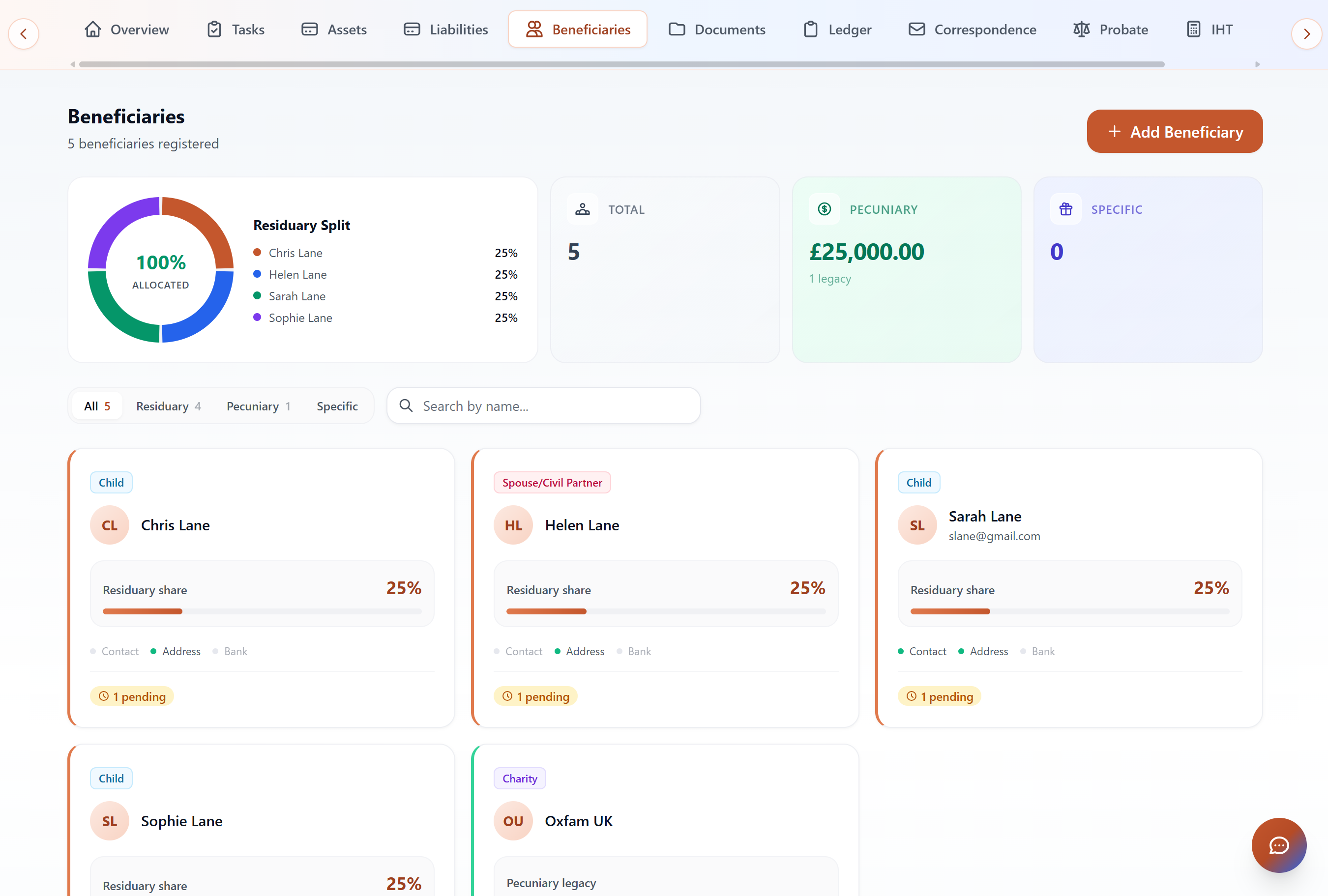
Estate Suite works best here when the same event is reflected in the right place:
- the document sits in Documents
- the contact with the bank or institution sits in Correspondence
- the money movement sits in Ledger
- the explanation or follow-up sits in Tasks or notes
That gives you a much cleaner trail from the evidence to the final figures.
If the estate is currently split across a spreadsheet, folders and email, read How Estate Suite works to see how a connected executor workspace keeps the record together.
Questions people usually ask
Do all estates need formal estate accounts?
Not every estate needs the same level of detail, but every executor should be able to explain the money clearly and support the figures with records.
When should I start preparing them?
At the start of the administration, not at the end. Even if the final version comes later, the record should be built as you go.
What is the main purpose of estate accounts?
To show clearly what came in, what went out, and what was left for the beneficiaries.
How long can HMRC ask to see estate records?
GOV.UK says HMRC can ask to see the relevant valuation and estate records for up to 20 years after Inheritance Tax is paid.