Detailed guide
Quick answer
Yes. If you are eligible to apply, you can submit a probate application yourself online or by post. You do not have to instruct a solicitor or probate practitioner simply because a grant is needed.
The more important question is whether the estate facts are clear enough for self-service to be safe and practical.
Who can apply
Who is entitled to apply depends on whether there is a will.
- If there is a will, the executors named in it are normally the people entitled to apply.
- If there is no will, the closest living relative follows the statutory priority rules and applies for letters of administration.
Special rules can apply where an executor has died, does not want to act, lacks capacity, or is not applying. Resolve the acting position before completing the application.
When applying yourself is usually practical
Self-service is often a reasonable fit where:
- the will and any codicils are available and appear valid
- it is clear who is entitled to act
- the estate is solvent
- the main assets and debts can be identified and valued
- the beneficiaries and their entitlement are clear
- the IHT position is straightforward or can be established reliably
- there is no dispute about the will, executors, or distribution
An estate does not have to be tiny to be self-managed. Organisation, evidence, and complexity matter more than a single value threshold.
What you need before applying
Before starting the application, you will normally need to:
- confirm whether a grant is required
- establish who can apply
- locate the original will and codicils, if there is a will
- identify and value the estate
- check the Inheritance Tax reporting and payment position
- prepare the gross and net estate figures
- gather the supporting information and documents for the application
For a paper application with a will, HMCTS guidance says the original will and official death certificate are required. The online service gives document instructions as the application progresses.
What applying yourself does not remove
Submitting the grant application is only one part of being an executor.
You are still responsible for:
- protecting estate assets
- dealing with tax and debts
- keeping a clear record of decisions and money movements
- collecting assets after the grant
- managing property and administration-period income
- preparing estate accounts
- distributing to the correct beneficiaries
DIY probate should therefore mean managing the estate with a proper process, not just completing the online form.
When targeted professional help makes sense
You can manage the main estate while paying for a specialist to handle one part.
Examples include:
- a chartered surveyor for property or specialist assets
- an accountant or tax adviser for complex IHT or estate income
- a conveyancer for a property sale or transfer
- a solicitor for interpretation, authority, disputes, or unusual distributions
Keep the advice, the underlying facts, and the resulting action in the estate record.
When not to proceed alone
Get specialist advice before applying or distributing where there is:
- a dispute about the will or who should act
- concern that debts may exceed assets
- a trust, business, farm, or complex relief claim
- foreign assets or cross-border tax
- missing or questionable testamentary documents
- a dependant or other person threatening a claim
- uncertainty over beneficiary entitlement
These issues can create personal risk for an executor if they are handled incorrectly.
The current application cost
In England and Wales, the current probate application fee is £526 where the estate is worth more than £5,000. There is no application fee where the estate is £5,000 or less. Extra copies cost £2 each when ordered with the application and £16 each if ordered later.
Read How Much Does Probate Cost? for the wider cost checklist.
How Estate Suite supports self-serve executors
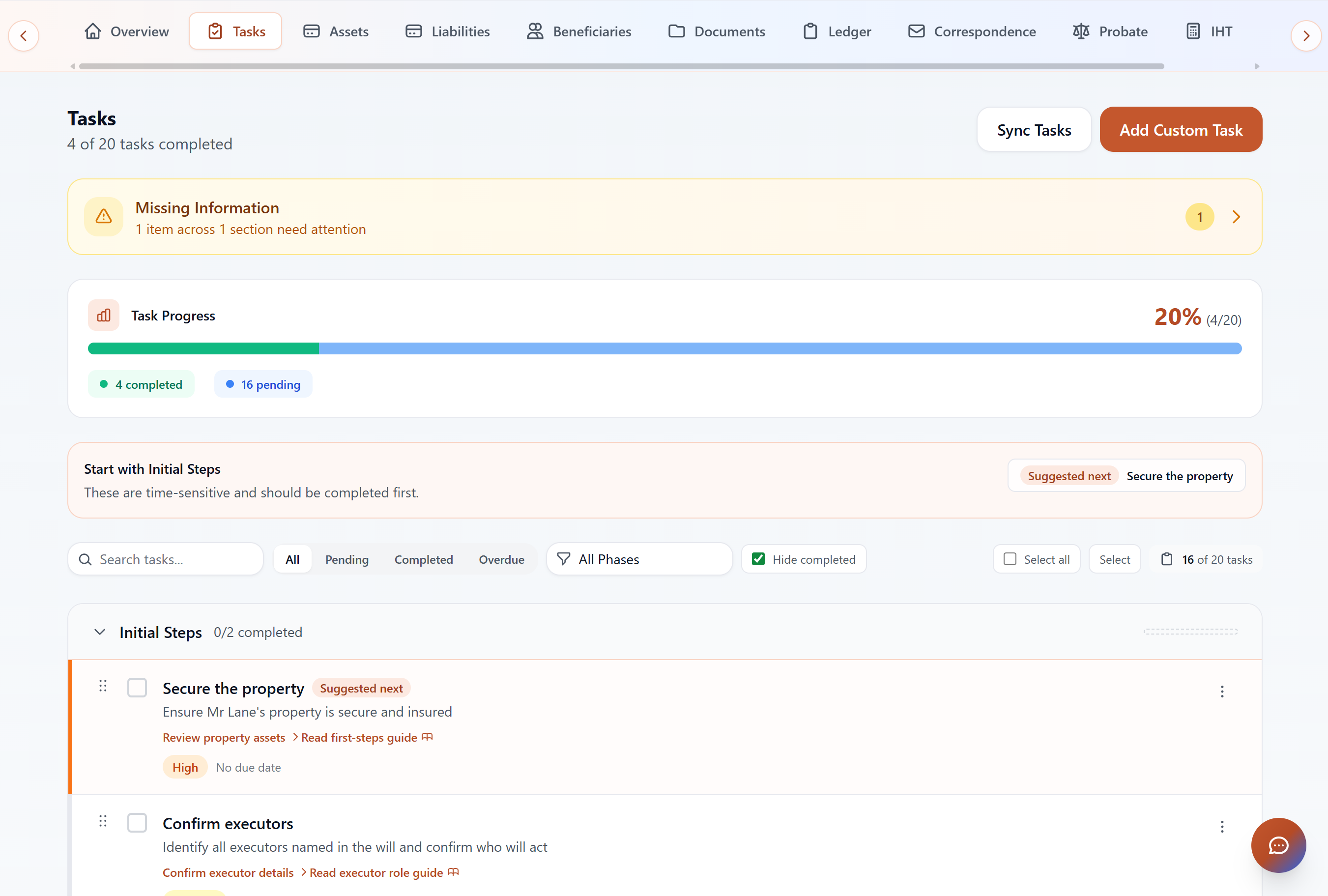
Estate Suite does not replace the official GOV.UK application or professional advice. It organises the work around them:
- assets, debts, people, and supporting documents
- executor tasks and open questions
- IHT and probate preparation
- institution correspondence
- estate receipts, payments, and final accounts
That gives the executor one record from first checks to closeout.
FAQ
Do I need a solicitor to apply for probate?
No. Eligible personal applicants can apply online or by post. A solicitor or probate practitioner is optional unless you choose to instruct one.
Is DIY probate suitable when there is a house?
It can be. Property adds valuation, insurance, sale or transfer, and tax work, but it does not automatically make self-service inappropriate. Use targeted professional help where needed.
Can co-executors apply together?
Yes, where they are entitled and choose to act. Make sure every named executor's formal position is correctly reflected in the application.
What is the biggest risk in applying yourself?
Submitting on incomplete or inconsistent estate, tax, will, or executor information. Build and check the underlying estate record before applying.