Detailed guide
Quick answer
The usual order in England and Wales is:
- identify and value the estate
- work out the Inheritance Tax reporting and payment position
- complete any required HMRC reporting and normally start paying tax that is due
- apply for probate
- use the grant to collect assets, settle the estate, prepare accounts, and distribute
The same estate values sit underneath both the tax and probate work. That is why the process should start with a reliable estate picture rather than two separate sets of forms.
Why Inheritance Tax usually comes before probate
GOV.UK says you must check whether Inheritance Tax is due before applying for probate. If the estate needs full reporting, you cannot apply until that reporting step has been completed.
Where tax is due, you will normally need to make a payment towards it before the grant is issued.
This can create an apparent circular problem:
- the executor needs the grant to access some estate assets
- HMRC usually expects a tax payment before the grant
The solution is to plan the funding route early rather than wait until the probate application is ready.
Step 1: build the estate value
Before choosing either route, identify:
- money, investments, property, personal possessions, and business interests
- jointly owned assets and how they pass
- mortgages, loans, bills, and other liabilities
- lifetime gifts or trust interests that may affect IHT
- available reliefs, exemptions, and transferable allowances
Keep the statement, valuation, or other evidence behind each material figure.
Step 2: confirm the IHT reporting route
Many estates do not pay Inheritance Tax, but the executor still needs to determine how the estate should be reported.
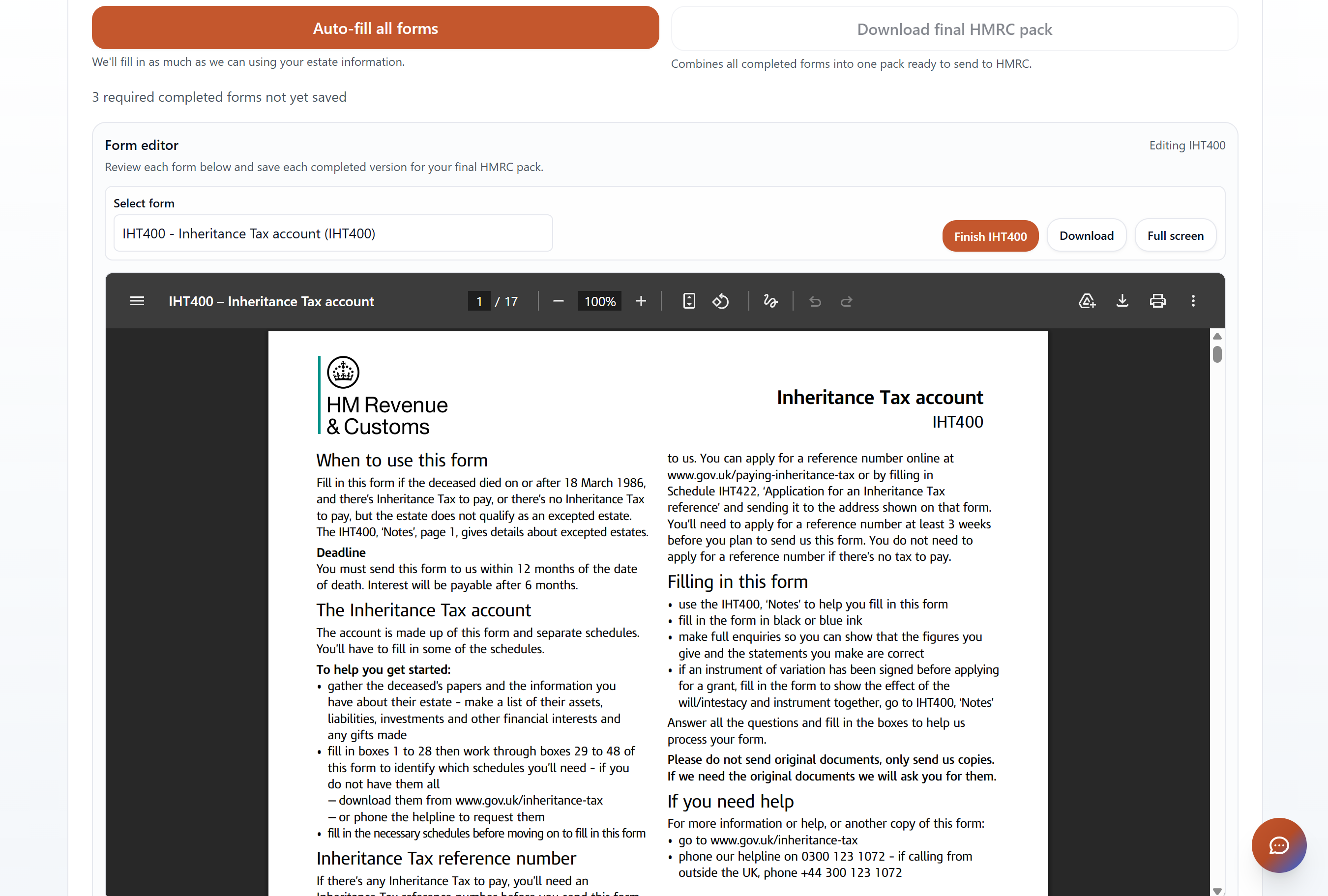
The route depends on the estate facts and date of death. Some estates can be dealt with through the probate application information, while others require the fuller IHT400 account and supporting schedules.
Do not assume that "no tax to pay" always means "no tax work to do".
Step 3: arrange any payment
If tax is due, possible routes include:
- paying from the executor's own or a joint bank account and reclaiming it from the estate
- asking a participating institution to pay directly from the deceased's account
- paying qualifying tax by instalments
- making a payment on account before the final liability is known
HMRC also has a grant-on-credit process for cases where funds cannot be released before the grant and the available funding routes are insufficient. That is a specific application, not an automatic extension.
Step 4: apply for probate
Once the estate value, IHT reporting, and payment position are ready, the executor can complete the probate application.
Check that:
- the names and dates match the will and death certificate
- the gross and net estate values match the underlying estate record
- the executor position is clear
- required tax steps have been completed
- the original will and supporting documents are available where needed
Inconsistent figures create avoidable questions and delay.
What happens after the grant
The grant is authority to continue administering the estate. It does not close the tax position or finish the executor's job.
After the grant, the executor will usually:
- collect or transfer assets
- sell property where required
- pay remaining IHT, debts, expenses, and administration-period tax
- keep records of all receipts and payments
- prepare final estate accounts
- distribute to the correct beneficiaries when safe
Read What Happens After Probate Is Granted? for the post-grant workflow.
When the usual order needs specialist help
Pause for advice where the estate includes:
- possible insolvency
- disputed authority or a challenged will
- trusts, business assets, or agricultural property
- foreign assets, residence questions, or cross-border tax
- large lifetime gifts or uncertain ownership
- no practical way to fund tax before the grant
The right response is to resolve the issue before relying on a probate timetable.
FAQ
Can you apply for probate before paying Inheritance Tax?
You must first complete any required IHT reporting. Where tax is due, GOV.UK says you will normally have to start paying it before probate is granted.
What if the estate has no cash to pay IHT?
Check direct payment from the deceased's accounts, instalments for qualifying assets, other available estate funds, and HMRC's grant-on-credit guidance. Complex funding decisions may need tax or legal advice.
Do all estates pay Inheritance Tax?
No. Most estates do not pay IHT, but executors still need to value the estate and confirm the correct reporting route.
Is probate the end of the estate administration?
No. Probate gives authority to collect and deal with assets. Debts, tax, accounts, and distribution still follow.